• Chester Jacobs

    The Verbal Text

    Please be advised: If the following doesn’t convince you of the importance of giving your child a cell phone and text messaging privileges, I don’t know what will.

    Between classes I try to stand at my classroom door to monitor the hallway, where much drama tends to happen. For example, since students are not allowed to use their phones in school, I’ve been able to overhear what they might otherwise text to each other:

    One boy, while digging in his locker, to his friend: “Hey! Come here a minute!”

    The friend: “I’m going to be late for class. Yeah?”

    The boy: “I just wanted to say, ‘Wassup.'”

    The friend: “Oh, okay.”

    The boy: “Wassup?”

    The friend: “Nothing.”

    The boy: “Me, neither.”

    The friend: “Well, I’ve got to go.”

    The boy: “Talk to you later.”

  • Chester Jacobs

    Handwriting

    A couple years ago I made a poster for my classroom wall. It shows the major elements of fiction, such as a plot diagram, and definitions for theme, conflict, etc.

    Last week I decided it was outdated and could be improved. Plus, I had two extremely bright students itching for a creative outlet. I couldn’t just tell them, “Go blog, why don’t you?” and so I invited them to redesign the poster.

    Today, as they were working, I overheard this conversation with a third student:

    “Who made the old one?”

    “Mr. Jacobs.”

    “Mr. Jacobs? He couldn’t have. He can’t write that neatly.”

  • Chester Jacobs

    Ornithology

    Today I received a thank-you note from a colleague who has some serious cancer. I had donated a day of sick leave to her, but she was also grateful for the video filmed by my assistant principal of a few men (including me and the principal) singing a tailored version of “You Are My Sunshine” for her.

    The video in part featured another colleague facing away from the camera and crawling back and forth on the piano while our Spanish teacher, formerly a professional percussionist (he’s played with Santana, even), and a science teacher on tuba accompanied our fresh-out-of-college chorus teacher on piano. At the end of the song, we singers began taking off our shirts. We’d forgotten to give full instructions to the assistant principal, who appeared not to be turning off the video camera, and so I think the video, which I have not seen, ends with us motioning to her, “Enough!” before too many buttons were undone.

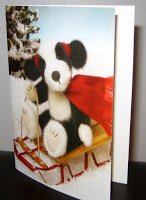
    So anyway, today I received the card. I was puzzled by the black and white drawing on its front, of a very dark, fearsome-looking bird. “A raven?” I thought. “Isn’t the raven a symbol of death?” I wasn’t sure if my colleague had an odd sense of humor or was hinting at her resignation to her illness.

    When I got home, I showed M the card. “A raven?” she said. “I think it’s a hawk.”

    Sure enough, on the back of the card was the artist’s note about his subject, a Harris hawk.

  • Chester Jacobs

    The Infliction of Pain

    Only on occasions when we’ve netted considerable gain can we laugh about shooting ourselves in the foot.

    Today in second period, following my brilliant first period reading of Robert Frost’s “Mending Wall,” a student told me, “Mr. Jacobs, Someone wrote all over my desk.” I leaned over to see the penciled lines, “OMG I am so bored.” I asked the student to erase it for me, remembered that the custodian had wiped off my student desks yesterday, and noted who had occupied that seat in first period.

    In fifth period, my planning time, I tracked down the student, a pleasant girl who is really into death and stuff like that, and pulled her from her class. “What am I going to have to do?” she asked.

    “Terrible things,” I told her, lugging a stack of 1,300 worksheets and a hole punch to a small table where she had pulled up a seat.

    Halfway through her work, she asked, “Do I have to do all of this?”

    “Yup,” I said.

    “My mom makes me do this for her at her work, too.”

    “Does she pay you?”

    “No, I’m grounded. But I don’t mind it. Can I do this tomorrow, too?”

    Oh well–I guess pain inflicted isn’t as important as work accomplished!

  • Chester Jacobs

    This Week at Work

    Highlights:

    Old Fart, during a team meeting, about a particular student: “He has the memory bank of a dead toad.”

    A colleague leading a meeting about grading: “If a student can’t pass the mustard on the test…” and, “It’s not that we have a huge road to hoe against us…”

    A student’s innocent persuasive essay advocating for sex education: “Let students teach students with fun, hands-on learning.”

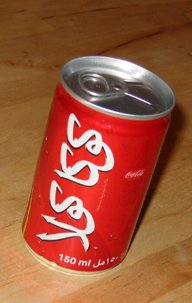
    And finally, the five-ounce can of Coca-Cola pictured here was given to me by a student whose dad is in the military in Iraq. I am grateful for the student’s sharing with me, but unsure about the moral complications resulting from having such a possession. I certainly don’t want to drink it.

  • Chester Jacobs

    Broken Heroes

    Yesterday I shared Ron Clark’s Rule 55 with my students. It reads:

    “Be the best person you can be. Throughout life, you are going to be lonely at times, you are going to have your heart broken on occasion, and you are going to feel as if something is missing from your life. No life is lived without some amount of pain and heartache. No matter how bad things get, however, make sure you are always developing into the kind of person you want to be, and the kind of person others will want to be around. It is important not to let external factors keep you from developing who you are and the person you are trying to become. Always make sure there are seven things in your life at all times: laughter, family, adventure, good food, challenge, change, and the quest for knowledge. With all of those things, you will grow, enjoy life, and become the type of person you can be proud of. You will also be in a better position to help others, give advice, and learn from your mistakes, because you will be a stronger, healthier, and happier person.” (The Essential 55. New York: Hyperion, 2003.)

    I asked the students to respond to three questions: What bad thing is happening in your life? How can you be who you want to be even if that bad thing is happening? What can you do differently to make yourself a stronger, healthier, and happier person? I explained to students that I would collect their responses only if they wanted me to, and that I would not ask them to share or read what they’d written.

    Some students treated the whole thing playfully, like the one boy who wrote in response to the third question, “Eat more broccoli?”

    In one class, however, after allowing time for students to write, I asked for thoughts about the activity itself. One girl spoke, and she said that she didn’t like it because she likes to come to school to be with friends and forget her problems.

    She was one of the students who handed in her paper. It and the others I read were full of tough domestic situations: a drinking dad who often lands in jail and desires no contact with family, a sister with three children by different dads, a dad who is away working, parents divorcing, a faith kept secret from friends, motherlessness, and many more heart-wrenching experiences no twelve year old should have to deal with.

    I tried my best, in my own brief responses, to acknowledge their difficulties and their courage, and handed their papers back to them.

    Will this Rule 55 discussion impact them? I don’t know. I hope they keep the rule in mind, at least, and think about it once in a while. The exercise impacted me, that’s for sure–it impressed upon me the fact that many students are heroes just for making it to school in one piece.

  • Chester Jacobs

    Hmmmm…

    If students are bad enough, they get to have out of school suspension. In March, if school-wide attendance averages 95% or higher, school will be “canceled” for half a day while everyone goes to the movies. Hmmmm…

  • Chester Jacobs

    The Reality of Complexity

    Last night I dreamed I purchased a handgun, for protection from intruders entering my (dreamed) city dwelling.

    The whole idea of owning a handgun has always appealed to me. Wearing it on my hip would cause people to take a second glance at me, to regard me reverently. (There’s another fantasy I have, too, usually during rather dull presentations as are occasionally mandated by my employer, of running onto the stage and tackling the speaker mid-sentence, arresting him or her for past crimes. That would really make people think twice around me.)

    But reality always sets in. In my dream, having the gun was exciting until I realized the problems I’d just adopted as my own, namely that I would need to keep it in a safe place so no innocent child or troubled youth could happen upon it. And then there was always the possibility of hurting, even killing someone with the gun. While fending off an intruder may be one thing, just having a gun leaves open the possibility for committing murder, for crying out loud, and I don’t want to go there, ever. I awoke understanding the reality that guns for protection decrease protection.

    Today at school, too, reality set in. A defiant boy accelerated his descent away from model studentship by refusing to work or behave and by turning in an inappropriate essay. This essay he wrote presumably with the blessing of his parents, since they had, earlier, actually discussed it with a school administrator, who had suggested to them its inappropriateness. In fact, the essay was about that very administrator, as all parties involved were well aware! The situation was quickly referred to the head principal, and the boy was sent home with a letter of warning.

    I did my best to recover and put on a friendly face for the rest of my students, and felt affirmed by the principal’s determination to suspend the boy whenever possible. Later, however, I learned from my history teacher colleague (“Old Fart,” actually) that the boy’s mom had at some point “lost” a son, which may account for some of her protective spoiling of her remaining son, as tragic as it may be that her very adoration will likely lead to both his social demise and her motherly anguish.

    Reality also set in some months ago when I was summoned to court by a father suing for custody of two of his six children. The father had left the mother for one of his college students and, I suppose, was getting tired of paying child support. As a teacher of one of the coveted sons, I was one of three witnesses presumably to take the stand on behalf of the father, to say what in his favor, I really had no clue.

    In fact, so annoyed and angry was I at having to miss a half day of work–and, on top of that, much of an evening, while my wife at any minute would maybe go into labor–that I toyed with the idea of testifying strongly on the mother’s behalf. That would have come more easily, anyway, since she hadn’t left her family. My bitterness towards the father changed to sorrow in that courtroom, however, when I realized there could and would be no winners, ever, no victors justly triumphant. All involved were pained, villains or no.

    But I cannot keep on saying “reality set in.” It could be that reality is beyond any sort of “setting in,” or at least, perhaps, it can never “set” in the way poured concrete will take a specified shape and then harden to that specific form. On my drive home today I listened to an interview with a compelling agnostic who, once a devout evangelical Christian, has now shifted his certainty to uncertainty.

    Somehow either form of sureness neglects the reality of complexity.
  • Chester Jacobs

    Student Christmas Cards 2007

    I’m home under the threat of weather today, and have barely rescued from the looming prospect of discardation by bustling housewife the Christmas cards given me by my students.

    “Everything you don’t throw away,” she informed me as she prepared to replace artwork on the refrigerator with more recent artifacts, “you must find a place to keep.”

    I looked through the Christmas cards and reminisced about my fine students, who are probably immensely enjoying the snow day without me. Here are a few excerpts from what they wrote:

    “I just wanted to wish you a wonderful Christmas with your new born! You have been a great teacher to me! Thank you! Merry Christmas!”

    “Merry Christmes Mr. Jacobs. Just in case your wondering this is a cherry acorn. My grandpa and I made it on his lathe. I hope it looks good on your christmes tree.”

    “Hope your holidays are filled with love and cheer and may god bless you and your wife oh plus the new baby with tons of love [hearts and name].”

    “Merry Christmas, and congradulations! P.S. Keep trying to hide the fact that your Superman! lol.”

    “Merry Christmas Mr. Jacobs! Enjoy your new baby!”

    “Dear Mr. Jacobs, I hope you have fun with your wife and upcoming little one.”

  • Chester Jacobs

    Polite Students

    Nothing is as gratifying as having nearly 90 students greet me as they enter the classroom, “Good morning/afternoon, Mr. Jacobs,” or leave my room saying, “Thank you, Mr. Jacobs.” It puts me in a good mood, and I often reply in turn, “Good morning, Ronnie,” or “You’re welcome, Ronnie,” or “Thank you, too, Ronnie.”

    I’m hoping that my students’ politeness someday spreads to their other interactions with adults. If it doesn’t naturally, though, I hope other teachers will try what I’ve done–make the “Good morning” the students’ entrance pass, and the “Thank you” their exit to freedom from the tortures of an insistently polite, balding teacher.