|
| SK |
We took on Goliath and lost–and had an exhilarating birth anyway.
We knew in advance that our insurance provider does not cover births not overseen by an obstetrician, choosing instead to pay only for currently predominant models of maternity care in spite of our nation’s infant mortality rate global ranking of thirty-fourth. But earlier this year we began requesting preauthorization for reimbursement anyway. We followed the full appeals process (see our final letter below), hoping for the bureaucracy to mend its ways and help pay for H’s birth:
The Birth Story
3:45pm, Sunday, July 10, 2011–M first wonders (to herself) if she feels contractions.
4:30–I decide to make up a curry supper, and we invite my parents (at JandJ’s while on call) to join them. M advises me on how little cayenne powder to use.
6:00–The curry is not spicy and looks like dog vomit.
6:30–Before the light dessert, M says, “I have a confession to make. I’m having contractions.” SK says, “I just noticed that you’d gasped!” I let out a whoop: “It was the curry!” M says, “I have another confession to make. I’ve been having contractions for a couple hours already.” Historical note: My parents took us out for Indian food while M was in the early stages of labor with N; M and I hadn’t told them ahead of time that M was having contractions.
7:00-8:00–We give heads-up and later update calls to the midwife and M’s sister H, and take showers. H says she’ll take a shower and come. While SK takes N to JandJ’s for the night, I set up the music system in the bedroom (M had prepared soothing and energizing playlists for labor) and M alternates between tidying up the house and laboring on her hands and knees. PK washes the dishes before leaving to JandJ’s.
8:00–M and I walk around the yard with the piz wat dog Canela, stopping frequently for contractions.
8:25–I call the midwife and tell her to come.
8:30–We take the birthing ball onto the back deck, where the breeze feels cool; I bring a family heirloom braided rug for under M’s knees.
8:45–M’s sister H arrives. I tell her “it’s pretty intense.” At some point Bandida the cat brushes against the laboring M’s arm.
8:55–The midwife arrives after M has had four contractions that “feel like pushing.” Moments later, as the midwife is in the bathroom, M’s water breaks. The midwife rushes out, and says, “I’m fine with you having the baby out here, but if you’re not, then we’d better get you inside right now.” M says she’s fine here. Canela is cornered on the deck between the railing, M, the midwife, and the house, but is very calm. The midwife says she doesn’t mind the dog, who is standing very, very close to her.

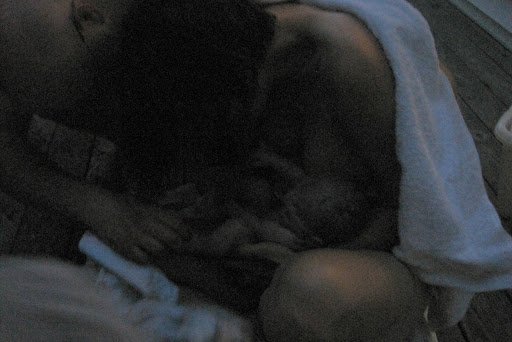
9:03–The midwife announces that the baby has crowned; I get a good look at a very dusky face. M says, “Come out baby, I’m waiting for you,” and pushes twice more and out comes the baby. The midwife and I catch it and bring it up to M. It looks quite grey, so at first all focus is on stimulating the baby’s breathing. The baby’s cry becomes more vigorous, and I ask, “Are you a boy or a girl?” and check, and call her by name. Canela finally finds a way around the mess and off the deck.
9:25–SK and PK bring N home and wait in the driveway. The midwife’s apprentice arrives. Upon being introduced to the baby, N turns to me and says, “Look at my stickers!” N relays messages to PK and SK: “Daddy said it’s a baby!” When they asked if it was a boy or girl, she says, “We don’t know.” As for its name, she says, “We don’t know!” Later she tells M, “I’m so happy!” and as I talk her to sleep later, telling her about the birth, N asks, “Is it another baby? Are there two babies?”
9:45–The midwife’s assistant arrives.
10:30–M takes a shower. Halfway through, the water shuts off. I run down to the barn to bleed the air out of the system so she can continue.
1:30–The midwife and her helpers leave, and the house quiets down for the night.
Throughout the post-birth events, M and I kept looking at each other and laughing with surprise: “You mean it’s over already?”
The Letter of Appeal
from M to our health insurance non-provider:
I am writing to request a 2nd Level Appeal of your decision to deny preauthorization for the prenatal, birth and postpartum care services provided by _______, certified professional midwife (CPM), of __________ Birth Center. I have been receiving and paying for prenatal care since January 2011 with an anticipated delivery date in early July 2011.
While I understand that my policy states that it does not provide for the services I am requesting, the policy is based on prevailing conventions of medicalized birth and neglects to consider research-based, effective and healthy alternatives. It also creates a significant barrier to free, informed choice regarding optimum health care. Therefore I urge you to reconsider your denial of coverage of a certified professional midwife for my low-risk pregnancy care, in light of the following advantages:
 |
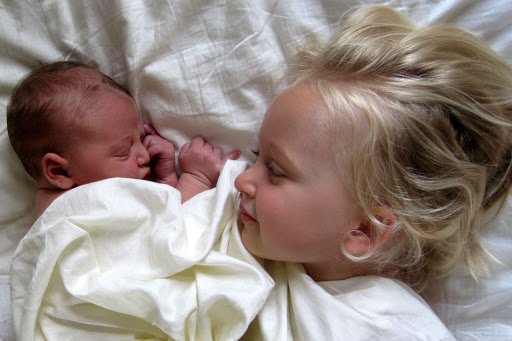
| N, early 2008 |
1. Lower cost: In 2008 the average payment for in-hospital vaginal delivery in the U.S. was $7,737 (Sakala and Corry). In 2010 a typical fee for OB/CNM prenatal care and vaginal delivery at my local hospital was $6,118. My certified professional midwife’s fee of $2,900 (plus incidental expenses), which I am paying out of pocket prior to the birth, is substantially lower than the costs associated with an in-hospital birth. The American Public Health Association, “Recognizing that out-of-hospital settings have the potential for reducing the costs of maternity care … urges public and private insurance plans to eliminate barriers to the reimbursement and equitable payment of direct-entry midwifery services in both public and private payment systems” (APHA).
|
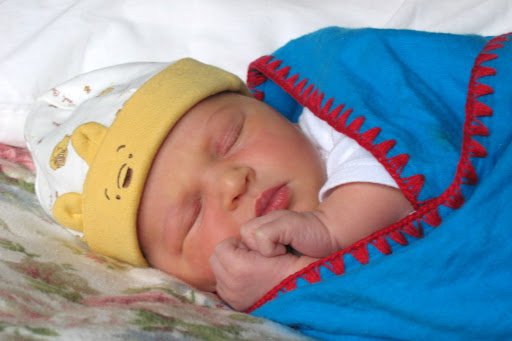
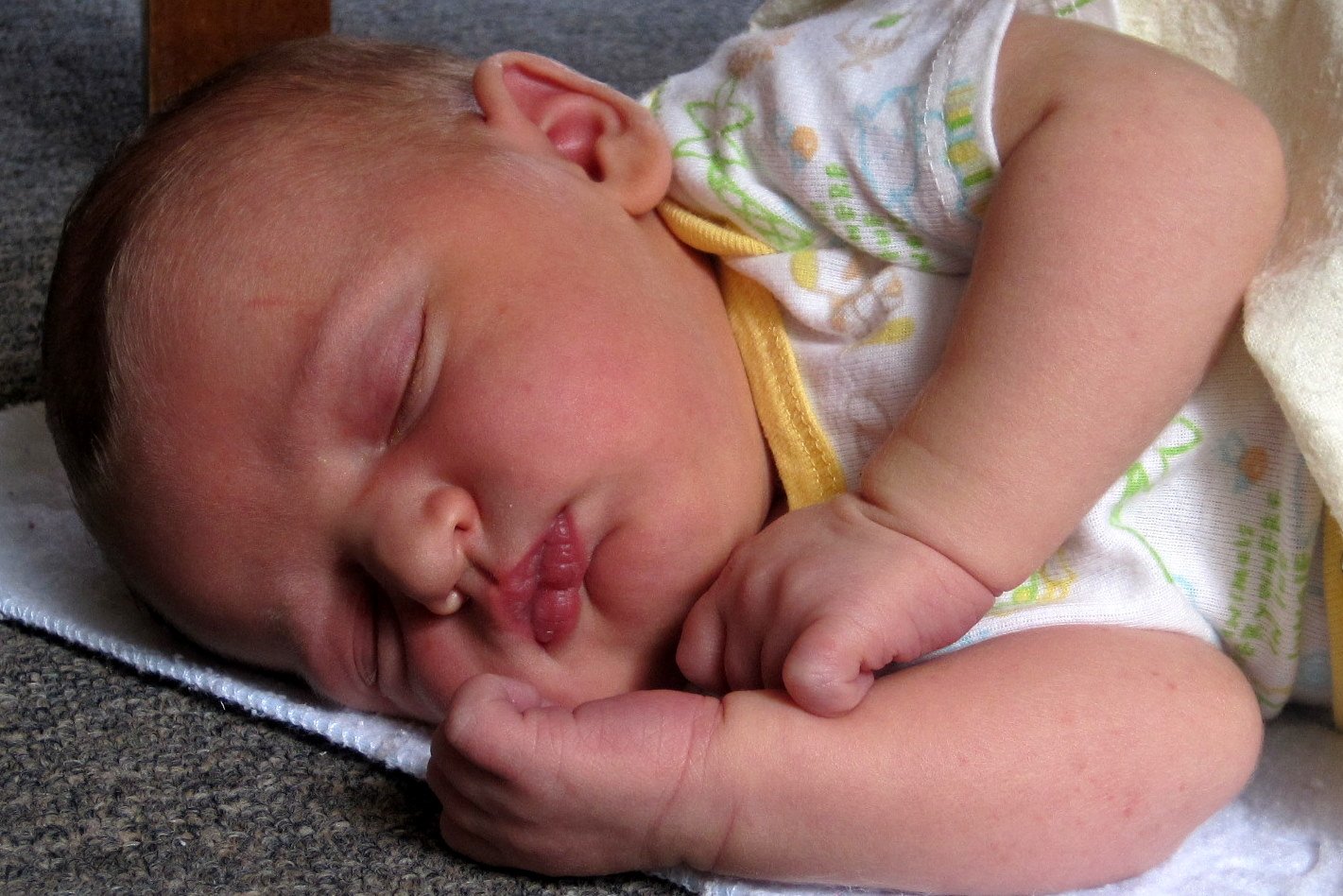
| H, 2011 |
2. Health and safety: Mortality rates for babies born out-of-hospital are statistically comparable to in-hospital births. A 2005 study states, “Planned home birth for low risk women in North America using certified professional midwives was associated with lower rates of medical intervention but similar intrapartum and neonatal mortality to that of low risk hospital births in the United States” (Johnson and Daviss). The American Public Health Association supports “increased access to midwifery services,” and “efforts to increase access to out-of-hospital maternity services … through recognition that legally-regulated and nationally certified direct-entry midwives can serve clients desiring safe, planned, out-of-hospital maternity care services” (APHA).
Furthermore, out-of-hospital births avoid unnecessary, expensive, and potentially harmful interventions that are often routine or even mandated by hospital protocol. My CPM adheres to the Midwives Model of Care, which uses safe, evidence-based practices that have been shown to improve outcomes for mothers and babies, in contrast to many hospital birth conventions, in which: “Many maternity practices that were originally developed to address specific problems have come to be used liberally and even routinely in healthy women. Examples include labor induction, epidural analgesia, and cesarean section. These interventions are experienced by a large and growing proportion of childbearing women; are often used without consideration of alternatives; involve numerous co-interventions to monitor, prevent, or treat side effects; are associated with risk of maternal and newborn harm; and greatly increase costs” (Sakala and Corry).
 |
| N’s birth in 2007 |
My first child was born in 2007 at my home following a healthy, complication-free pregnancy. After researching options for childbirth, I concluded that the evidence supported out-of-hospital birth as the safest and most beneficial choice for a low-risk mother and baby. My then insurance provider reimbursed me for much of the cost of the attending CPM’s services.
Continuous, personalized care by a single, qualified midwife and her assistant, along with autonomy, privacy, and integration of birth into normal family life, all contributed to my satisfaction with this positive and fulfilling experience. More than three years later, my daughter and I continue to be exceptionally healthy in every way.
My current pregnancy has been equally healthy. In addition to regular prenatal consultations with the CPM, which have revealed no risk factors, I am actively preparing for childbirth by refreshing my reading on the subject. In conjunction with my midwife’s recommendations and my own value of preventive health, I give careful attention to my daily exercise, rest, and nutrition.
Given my healthy lifestyle and the absence of risk factors, I am confident in my responsible choice of an out-of-hospital birth attended by a CPM. Of course, as discussed with my midwife, I would not hesitate to seek appropriate care at my local hospital should complications arise in pregnancy or labor.
As a healthy, low-risk person who has researched and weighed the advantages and disadvantages of in-hospital and out-of-hospital birth, I ask that you honor my informed choice by reversing your initial decision and contributing equitably toward the costs of my upcoming out-of-hospital birth.
Thank you for your consideration of my 2nd Level Appeal. I look forward to your reply.
The Reply
“The Committee determined that the denial is upheld as prenatal care by a midwife who is not a licensed nurse or nurse-midwife is not a covered benefit under your plan, therefore the charges are your responsibility. … The Birthing Center must … provide care under the full-time supervision of a Physician and either a registered nurse or a licensed nurse-midwife….”