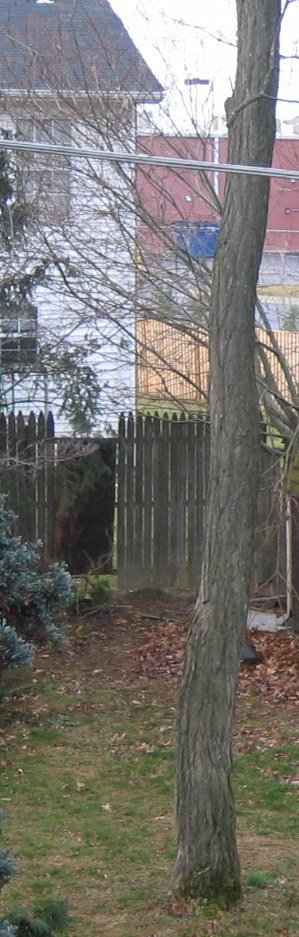
On a certain plot of land in the midst of townhouses and smaller single-family dwellings, a certain grocery store chain constructed a megaplex of blueberry, chocolate, and cream puff donuts, prepackaged salisbury steak dinners, and fresh vegetables like okra and carrots. Around the store grounds was built a wooden slab fence, with two gates, one on the east side and one on the west side of the store.
The only problem was that whenever a nearby family, whose back yard nearly bordered the fence behind the store, desired exercise, gasoline conservation, outdoor conversation, and groceries and so decided to walk to the store, they either had to walk a long way–including along a busy road with no sidewalks–or venture through one of the two gates, which necessitated trespassing through someone’s yard.
The ethical dilemma of trespassing was rendered irrelevant soon enough, however, by the padlocking of the gates. The message was clear: don’t take a shortcut in our backyards. The family seldom walked to that store after that (instead, they shopped at their previous grocery haunt, which was farther away but could be approached with minimal trespassing), until one day they noticed that the padlocks had been removed, and the gates were swinging open. “Look at that!” they said, knowing in their hearts that once again they would need to find a balance between the tempting trespassing and dangerous busy-road walking. They ventured closer to the open gates, until they noticed a sign: “No trespassing. Surveillance.” Rats.
Not long afterwards, the hole in the neighbor’s fence bordering the family’s back yard began to grow, as did a nearby hole in the grocery store’s fence. The next-door neighbor boys began scrambling through the holes on their way to Cokes and chips or emergency rolls of toilet paper. No problem, the family decided–that little bit of trespassing saved those boys a lot of walking on the streets.
But the situation grew a bit more complicated.
A very small man moved into the neighborhood. His was the Chinese takeout restaurant being furnished in the megaplex. The family’s patriarchal figure one day helped the very small man lug some mattresses indoors when he first moved in; on New Year’s Eve, the very small man showed up next door, talking to the neighbor boys who so much liked Cokes and chips. “I’m all alone this evening,” he said. “All of my family is together elsewhere. But this is my New Year’s celebration,” he said, pulling a very small bottle of vodka out of his pocket. “Keep that in your house,” the patriarchal figure said pleasantly, and the very small man agreed. “Too many kids around,” he said. They chatted until the patriarchal figure nodded goodbye and went inside, thereby concluding a non-trespassing walk to the non-megaplex grocery store for a pack of diapers and a gallon of 1% milk.
The very next day, looking out his back window across their back yard, the family saw the very small man, his briefcase in hand, taking the shortcut to the megaplex. The day following, the patriarchal figure was raking leaves and said “Hello” to the very small man as he again ducked through the fence.
That very evening something happened. The neighbor boys showed up in the family’s back yard with a hammer, nails, and a big piece of plywood, and went straight to the bordering fence. The next time the very small man tried to go to his restaurant, he found his shortcut blocked.
Now the patriarchal figure worries. It wasn’t his fence to patch–and it wasn’t the neighbor boys’ fence to patch, either. But he had greeted the very small man taking the shortcut, and so the likely inference by the very small man would be that the patriarchal figure knew about, did not like, and was responsible for barring his quick, efficient means of getting to work.
Which couldn’t be farther from the truth.
2 Comments
My Freakwentness
Good fences make good neighbors, but only bad neighbors make good fences.
Second Sister
nice designings of your blog, bro.